
 3 months ago
83
3 months ago
83
ARTICLE AD BOX
Will GrantBBC's Mexico, Central America and Cuba correspondent

 Getty Images
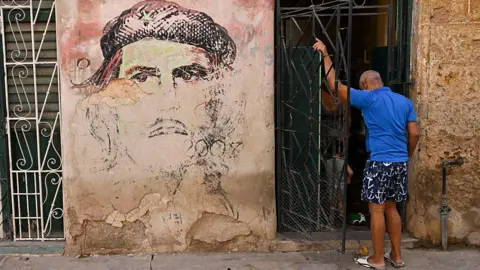
The day after Cuba was crippled by another 24-hour nationwide blackout, US President Donald Trump implied regime change in the country "will be just a question of time".
Standing in front of an awkward-looking Lionel Messi, Luis Suarez and the other stars of the Inter Miami soccer team on Thursday, Trump told the team's owner, Cuban-born magnate Jorge Mas, that they would soon be "celebrating what's going on in Cuba", adding that the Cuban authorities "want to make a deal. So badly you have no idea".
"It's going to be an amazing day," replied Mas.
In a conversation with the broadcaster CNN on Friday, Trump said: "Cuba is gonna fall pretty soon".
He added that the island's leadership is negotiating a deal and he was "going to put Marco [Rubio] over there and we'll see how that works out".
The present focus was on Iran, he said, adding: "But we've got plenty of time. Cuba's ready - after 50 years."
While the exact timeframe is not clear, what emerges from Trump's latest comments is that he and his administration intend to keep up the pressure on Cuba as a key part of his plans in the region.
 Getty Images
The reference to putting the US secretary of state "over there" could hint at a possible trip for face-to-face negotiations.
While that initially seems unlikely, this has been a year of unlikely events in the Americas, starting with the forced removal of Nicolas Maduro from power in Venezuela on 3 January.
In the wake of the US military action in Venezuela, Cuba, its closest regional ally, lost its main source of crude oil.
Under pressure from the Trump administration, none of the Cuba's other energy partners, particularly Mexico, has been able to step up to fill the breach in oil supply left in Venezuela's absence.
Evidence of the fuel crisis is increasingly clear across the length and breadth of the island.
Watch: BBC examines life in Cuba without electricity and gasoline
With only a small part of the state's garbage trucks operating, rubbish is piled high in the streets. Amid fears of a widespread public health crisis, some residents have taken to burning rubbish piles at night, filling the streets with acrid smoke.
Even in more affluent parts of the capital, Havana, people have been cooking with firewood during the blackouts.
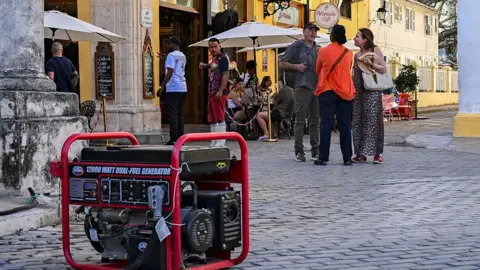
The lack of fuel does not just mean cars are difficult to run, but generators too.
Few residents have solar panels or any other option beyond the country's crumbling Soviet-era electrical grid. The island's thermo-energy plants simply cannot generate enough electricity for domestic consumption without more crude oil.
In that context, Trump and Rubio have repeatedly indicated that it is not the time to ease off on squeezing the island as hard as possible.
Such pressure may be a strategy to put Cuba in a weaker position at the negotiating table.
Critics say ordinary Cubans are most affected by the policy - not the leadership - and question if the strategy is designed to prompt some kind of internal uprising on the island.
 Getty Images
For its part, the Cuban government has not confirmed the rumoured talks taking place between the Trump administration and the island's top leadership.
It has been reported that the point of contact in Havana has been Raúl Guillermo Rodríguez Castro, the grandson of Cuba's aged revolutionary leader, Raúl Castro.
Given the pain being experienced by the Cuban people, some limited steps have been authorised by the government to allow the country's private sector to import the fuel they need to run their businesses.
But Cubans remain sceptical if this will make any significant difference to the crisis, as nationally these imports only represent a fraction of what the island needs to operate.
Meanwhile, tourism - the island's main economic motor - has been affected, with airplanes unable to refuel in Havana. Air France is the latest international airline to suspend flights to Cuba amid the difficulties.
While the weather remains cool in Cuba, people are at least able to sleep without power.
But many are worried about how people will react to living through the island's intense summer temperatures without air-conditioning or fans.

 English (US) ·