
 3 hours ago
8
3 hours ago
8
ARTICLE AD BOX
7 minutes ago
Jack Hadaway-WellerYorkshire

 Howardian Hills National Landscape
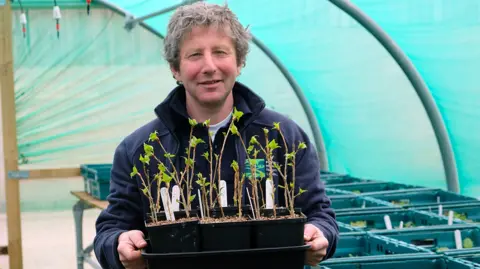
The saplings were propagated from Yorkshire's current black poplar population
A project to help save one of the UK's rarest native trees has begun in North Yorkshire.
As part of the Forgotten Flora project, the Howardian Hills Partnership and North York Moors National Park want to increase the population of black poplar trees which has dwindled to around 7,000 trees in the UK and Ireland.
"Of the 7,000 or so trees left, only about 600 are female and the rest male. This severely limits natural seed reproduction," said project leader Ambrose Greenfield.
Saplings which have been propagated from the few surviving trees in the county are being nurtured in Terrington, near Malton, before they are planted within the next two years.
"We've taken cuttings from the two mature trees we do know of in the Howardian Hills, one of which is female," says Greenfield.
To reproduce naturally, male and female trees need to be close to each other, with the fertilised seeds taking root in damp ground such as wetlands.
 Getty Images
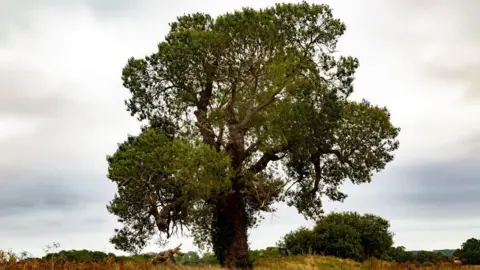
Black poplars can grow up to 100ft (30.4m) high and live for over 250 years
Black poplar can be identified by its deeply fissured bark and triangular leaves with mature trees often leaning to one side.
The trees were once a source of timber for floorboards as well as in cart wheels and wagon bottoms due to their wood being naturally springy.
The Forgotten Flora project was started three years ago with the goal of reviving threatened plants in North Yorkshire and has led to the planting of thousands of lesser-known wildflower species.






 English (US) ·