
 4 months ago
90
4 months ago
90
ARTICLE AD BOX
James GallagherHealth and science correspondent

 Getty Images
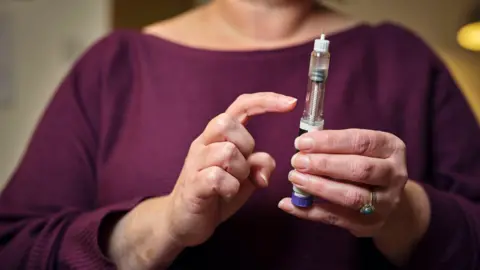
Weight loss injections mimic the body's hormones that make you feel full
Relying on weight-loss drugs like Wegovy and Mounjaro to tackle obesity would be a societal and medical failure, Prof Sir Chris Whitty says.
England's chief medical officer says the drugs are "transformational" for people who need them, but this should be "a very small minority".
Letting people become obese, to then medicate them for life would be "shocking" and the "wrong answer" to one of the most pressing health issues in the UK, he says.
Instead, Sir Chris says the UK should learn from other countries, including France, which are doing a much better job of eating healthily and preventing obesity.
Around two thirds of adults in the UK are overweight or obese.
Go back to the early 1990s and the UK and France had similar levels of obesity. But obesity levels in France have remained fairly stable for over three decades while the UK's have soared, Sir Chris says.
 Getty Images
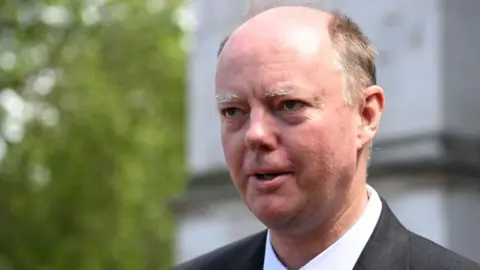
Prof Sir Chris Whitty has been chief medical officer for England since 2019
Speaking at the Medical Journalists' Association annual lecture, Sir Chris said he was worried about obesity as there is an "optimal weight" for healthy living, with larger waistlines increasing the risk of cancers, heart disease, type 2 diabetes and infections.
Weight-loss drugs mimic hormones produced by the body after a meal to suppress appetite.
The NHS offers Wegovy and Mounjaro through specialist weight management services to those with the greatest need, but there is a much bigger private market with people paying hundreds of pounds a month for the medicines.
Sir Chris said that if a high proportion of the population ended up on the drugs it would be a "societal failure".
Sir Chris, who will be familiar to many from his Downing Street briefings during the Covid pandemic, said he was worried the drugs were being seen as the solution to obesity.
"Is our answer to say 'give up on public health' and then just rely on drugs to get us out of a hole?"
"I do not think that is a socially acceptable answer, actually I don't think that's a medically acceptable answer, because these drugs are not benign," he said.
Sir Chris attacked the way children are targeted with "pretty aggressive marketing" of junk food which drives obesity and left the health service "having to pick up the pieces for the rest of that child's life".
 Getty Images
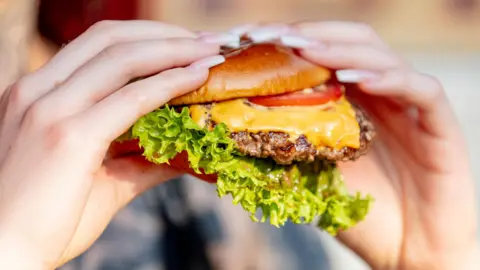
Sir Chris said people in parts of the UK are presented with "wall to wall" junk food
He said the food available on high streets in places like Wigan or Blackpool was "completely different" to equivalent towns in France and it was not the fault of people living there when presented with "wall to wall" junk food.
"That is a societal choice and is one that I think we should be looking at really, very seriously," Sir Chris said.
And he said cutting the amount of fat and sugar in our diet did not mean eating unpleasant food.
"No one can claim the French don't like their food," he said.
"It's perfectly possible to turn this around" and promote healthy, tasty and affordable food, he added.
"Other countries have managed it and I think we should be aiming to look at the countries which have and I would start with France, because it's just across the Channel, and it's very clear that they have succeeded."




 English (US) ·