
 2 months ago
56
2 months ago
56
ARTICLE AD BOX
6 hours ago
Ian YoungsCulture reporter

 Getty Images
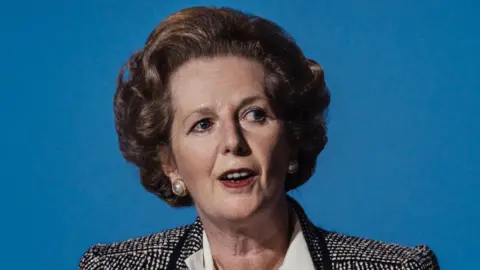
Margaret Thatcher was an unpopular figure in Liverpool during her reign as prime minister from 1979 to 1990
A story called The Assassination of Margaret Thatcher, in which award-winning author Dame Hilary Mantel imagined a plot to kill the 1980s prime minister, was controversial when it was published, and has now had its stage premiere in Liverpool.
The title was designed to grab attention - and divide opinion - but the new play's makers say it explores some serious and very current issues, including violence against politicians, the actions of angry and disenfranchised young men, and how people could and should resolve their differences.
When Dame Hilary published her original short story in 2014, its title was meant to provoke a reaction, according to playwright Alexandra Wood.
"Hilary Mantel, from what I've heard about her, was mischievous and she knew what she was doing and she was being provocative," Wood says.
"But the play doesn't deliver on that simplicity of the title."
Wood's adaptation of The Assassination of Margaret Thatcher has just opened at the Liverpool Everyman theatre.
Animosity towards Lady Thatcher still smoulders in the city, which largely blamed her for its industrial decline, unemployment and neglect in the 80s.
But Wood says the play isn't as simple as providing wish fulfilment for opponents of the divisive former PM.
"We give those people maybe 30 seconds worth of that, and actually the rest of the play is complicating it in a hopefully complex way," she says.
 Marc Brenner
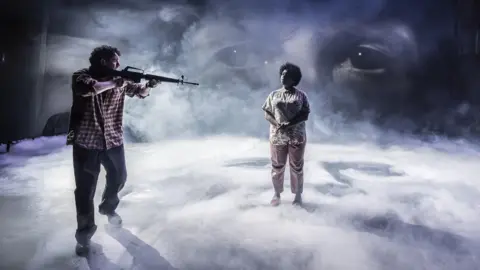
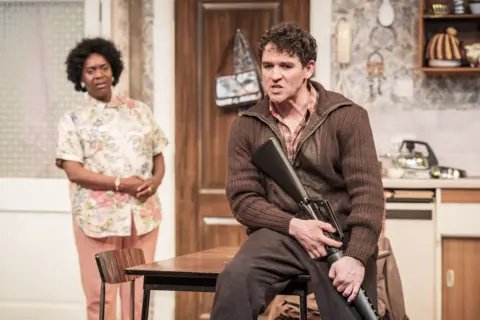
Robbie O'Neil plays Brendan (left), with Anita Reynolds as Caroline in the play
Set in 1983, The Assassination of Margaret Thatcher tells the fictional story of a sniper from Liverpool who plots to murder the then-PM.
He lies in wait for her at a window in Windsor, after being let into a flat by a woman who thinks he's the plumber.
Dame Hilary got the idea after she happened to spot Thatcher from the window of her own flat in Windsor as the prime minister emerged from a nearby hospital after an eye operation.
The writer realised how easy it could have been to have taken a shot. "I thought, if I wasn't me, if I was someone else, she'd be dead," she told the Guardian.
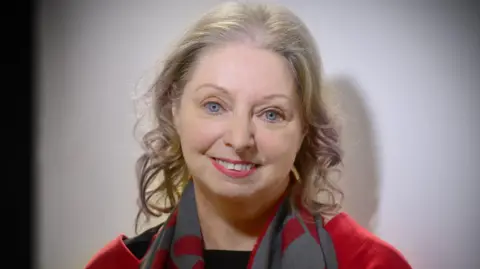
Dame Hilary Mantel won the Booker Prize twice, for Wolf Hall and Bring Up the Bodies
Dame Hilary spoke of her own "boiling detestation" for Lady Thatcher, but said she was "a fantastic character" and "the very stuff of drama".
The author set her short story a year before a very real assassination attempt, when the IRA bombed the hotel that was hosting the Conservative Party conference in Brighton.
The story angered Lady Thatcher's supporters, with former cabinet minister Lord Tebbit - whose wife was paralysed by the Brighton bomb - describing it in 2014 as a "sick book from a sick mind", and her ex-press secretary Bernard Ingham calling it "vindictive".
Lady Thatcher herself died in 2013 after suffering a stroke.
Dame Hilary, who was best known for Wolf Hall and twice won the Booker Prize, died in 2022.
 Getty Images
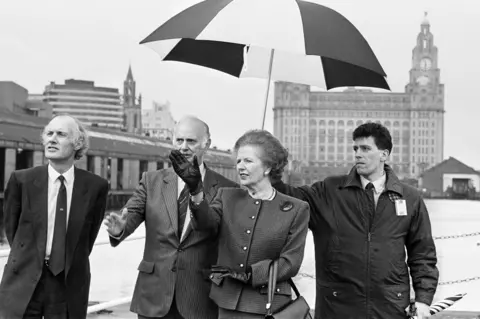
Margaret Thatcher pictured in Liverpool in 1989
Jade Marsden, a former Conservative candidate for mayor of the Liverpool City Region, believes the Everyman is wrong to now put on the stage version.
"I recognise that we shouldn't be afraid to have debate and controversial plays in the arts," she says.
"However, I think given the political tensions in the world and the increase in violence towards politicians, albeit that Margaret Thatcher has already passed, I don't think it should be encouraged."
Wood says the drama is "not inciting violence in any way".
"The play in no way advocates assassinating our political leaders, or anyone," the writer stresses.
 Marc Brenner
Brendan and Caroline debate his plan as he waits to carry it out from the window of her flat
The use of violence is among the questions that are debated as assassin Brendan waits at the window for Thatcher to come into view.
He holds Caroline, the character who lives in the Windsor flat, captive and the pair get into a discussion about his motives, the political backdrop of the day, and their contrasting backgrounds.
The fictional marksman claims to be acting primarily in the Irish Republican cause, and also rails against Thatcher's treatment of Liverpool.
In the play, Caroline is no fan of Thatcher either, but she tells Brendan violence isn't the answer.
Through the pair's conversations, the play tries to examine "what politics is and how we can disagree with one another - and that's OK, it doesn't mean you need to resort to violence", Wood says.
The question of how different people respond to "feeling powerless and being unable to change the way things are" is central to the drama, she adds.
"This act of terrorism feels like an act of desperation to be heard and to mean something and to matter and to have some kind of impact on the world.
"Caroline is someone who is fairly passive until she encounters this man who has such strong convictions that he's willing to murder someone for them.
"I'm interested in those two ends of the spectrum, and where and how they might influence one another."
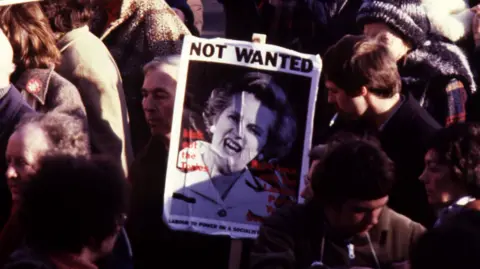
An unemployment protest in Liverpool in 1980 featured placards saying Margaret Thatcher was "not wanted"
Since the story's original publication, the dangers of violence against politicians have only grown, with a string of attacks in both the US and UK.
Most recently, a man has been charged with attempting to assassinate US President Donald Trump at last month's White House Correspondents' Dinner. Wood and the play's director John Young are speaking before that incident, which was the third assassination attempt against Trump.
Young says: "Since this short story was written, politicians in our own country have been murdered on the streets.
"The idea of an individual who feels so disenfranchised and so disconnected to a society, and so angry and so passionate that they think killing a politician is an answer to that problem - that happens and continues to happen, and that threat looms over us.
"So the idea of the play feels relevant in that way."
While politics in the 80s could be fiery, the play highlights the extreme divisions in our modern climate, the director says.
"We live in a world now where there isn't the space for people to actually have conversations and debate.
"I think we have got very good at tearing each other down very quickly and making quite fast assumptions, and [putting] targets on people in a way that doesn't promote conversation and debate politically.
"We are so far away from respecting the idea that it's OK to think differently to somebody else."
Lady Thatcher and her assassin are "the entrance point" to that issue, he says. "But actually this play feels like it's so much more than just about shooting Thatcher."
The Assassination of Margaret Thatcher is at Liverpool Everyman theatre until 23 May.



 English (US) ·