
 2 months ago
68
2 months ago
68
ARTICLE AD BOX
Just now
India PollockWales social affairs correspondent

 BBC
BBC
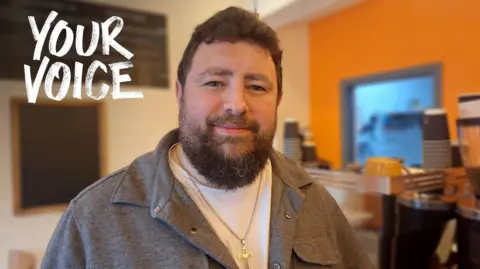
Daniel King says it is "impossible" to buy a house unless you inherit money and that hardworking people in their twenties and thirties are overlooked
Daniel King grew up with the idea that if you work hard, get a good education and a job, you would be able to buy a house.
However, despite working between 50 and 60 hours a week, he said saving for a deposit to buy a house on a single income was impossible and he was "trapped" in a private-rented flat.
Research from housing charity Shelter Cymru said the private rented sector was unaffordable for most people in Wales.
It said the only people who can confidently afford it were households with two full-time earners, with two or fewer children - and access to low cost childcare - who want to live in mid-Wales.
Landlords said their costs had increased too and said better data was needed.
King got in touch with BBC Your Voice to tell us he was concerned about the rising costs of housing.
The 36-year-old earns between £35,000 and £36,000 a year as a HGV driver, taking home between £2,300-£2,400 a month after he pays for things like tax and National Insurance.
He privately rents a one-bedroom flat in Grangetown, Cardiff, for £900 a month, which he describes as "a good deal".
About 65-70% of his income is spent on rent, council tax and household bills, and he saves a small amount each month but spends very little on non-essential items.
"I'm a very simple individual. I don't have a lot of expenses.
"I work hard and just want to be able to call a place mine, which I don't think I could do."
He said he was eligible for a mortgage and could pay the monthly payments, but saving for a deposit was impossible.
"It's not do-able, not for a single person.
"It's impossible to get onto the housing market unless you have generational wealth," he said.
King said rent prices in the area had increased over the years, and during Covid he was only paying around £500 a month.
He added that hardworking people in their twenties and thirties had nothing to show for it and were "completely overlooked".
 Getty Images
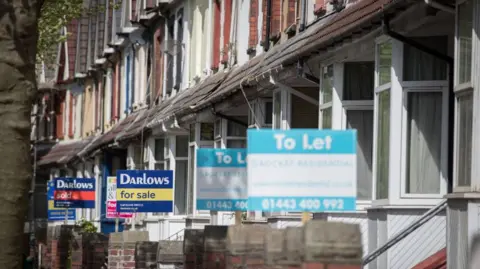
Shelter Cymru says 17% of households now live in privately rented homes - more than those living in social housing, but fewer than those who own their own home
Official data showed that rent was affordable across Wales, except in Cardiff and the Vale of Glamorgan.
But Shelter Cymru said up to half of the 20,000 people they helped a year had issues with the private rented sector, with many saying they could not afford their rent.
It created a new definition of affordability and said rent, council tax and basic utilities should cost less than a third of a person's income.
They specifically looked at how affordable rent was for people whose take home pay was between £2,000 and £2,300 a month.
Robin White, head of campaigns for Shelter Cymru, said it focused on people not on the lowest incomes, but those who might expect to be able to buy a home in the future.
"Wales has seen the fastest rate of rising rents anywhere in Britain," he said.
Its report said there was a "crisis of unaffordability" in the private rented sector and described it as the most "urgent housing issue" in Wales.
White added that it had led to increased homelessness, record numbers living in temporary accommodation and people not being able to buy their own home.
"This should be almost the number one priority for the next Welsh government."
The charity has made a number of calls, including bringing renters' rights into line with those in England and stabilising rent costs.

Douglas Haig says pressure on landlords had increased as well
Douglas Haig, a director of the National Residential Landlords Association, said landlords had been affected by the Renting Homes (Wales) Act, as well as the interest rate changes.
"I think adapting to what is one of the biggest changes in how we rent property in Wales for over a hundred years has meant retraining entirely and changing business models to a certain extent."
He said that costs had risen for landlords too, adding that the benefits for "accidental" landlords - those who ended up renting a house because they no longer lived there - were "pretty slim".
"Making all these fundamental changes is pretty tough for somebody that's just doing it as a part time investment," he said.
Haig added that discussions about rent controls had prompted landlords to raise rents when traditionally this was only done at the end of tenancies and said rent affordability was combined with food and fuel inflation, as well as energy costs.
He called on the next Welsh government to use a Welsh Housing Survey, similar to that in England to ensure there was accurate data.
What do the political parties say?
A Plaid Cymru spokesperson said it would tackle the housing crisis by creating a national body to accelerate the delivery of social homes, limit rent increased and strengthen renters rights by ending no fault evictions and improving housing standards.
"Plaid Cymru is the only party offering new leadership for Wales, with real plans to create a fairer housing system for everybody in Wales."
The Welsh Conservatives said Wales faced a housing crisis and they wanted the country to be a "home owning democracy".
They said they would scrap stamp duty to help people onto and up the housing ladder, easing pressure on the rental market.
A Welsh Labour spokesperson said the best way to make rents affordable was to increase supply.
"Welsh Labour has pledged to unlock a new decade of housebuilding be delivering 100,000 homes over the next 10 years, including a minimum of 40,000 warm, low-carbon homes for rent in the social sector," they added.
"We have a clear plan to increase housing supply and get the market moving, supporting both renters and aspiring homeowners," they added.
Reform UK said it had a "plan to build more homes" and will "prioritise Welsh people and veterans for social housing".
A Welsh Liberal Democrat spokesperson said: "For too many people the cost of living crisis starts with housing, with high rents, poor quality homes and hidden costs leaving families stretched every month."
They added the party would tackle the issue by "building 30,000 social homes to bring down pressure on rents" and would ensure all new homes are sold as freehold or commonhold so owners would not have to pay additional fees.
Wales Green Party have been asked to comment.






 English (US) ·