
 2 months ago
51
2 months ago
51
ARTICLE AD BOX

 Ben Mitchell
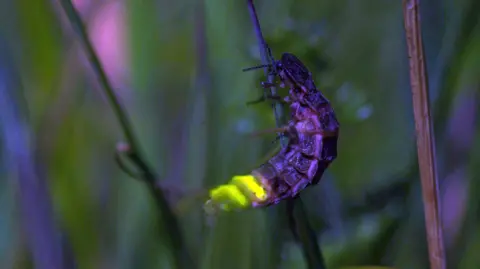
Glow worms are among the species that have been found on the West Cowal Peninsula
Kevin KeaneScotland environment, energy and rural affairs correspondent
Glow worms, slime moulds and rare lichens are among 1,109 species discovered in just one corner of Scotland's rainforest.
They were recorded on the West Cowal peninsula by the Argyll Countryside Trust (ACT) in the first survey to be carried out in the area in half a century.
The survey is part of a citizen science project which aims to better understand the role played by rainforests in supporting biodiversity. The project hopes to establish a baseline of the type of life being supported.
It comes as the Scottish government prepares to set new targets for restoring nature which has been in significant decline.
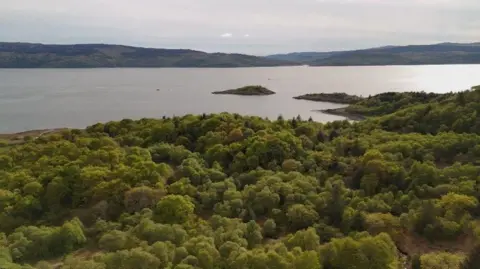
Temperate rainforests thrive along Scotland's moist Atlantic coast
According to NatureScot, Scotland has an estimated 30,000 hectares of "internationally important" rainforest.
It says high levels of rainfall, alongside relatively mild temperatures all year round, provide the right environment for rare lichens and mosses.
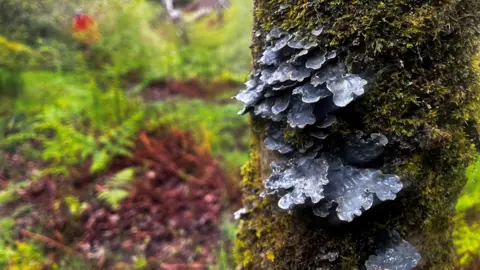
Scotland's temperate rainforest provides ideal conditions for rare lichens and mosses
ACT rainforest manager Ian Dow said the pockets that remained were globally important and even rarer than their tropical equivalents such as the Amazon.
"The high levels of biodiversity and the complexity that we have in our temperate rainforest sites are hugely significant," he said.
"And biodiversity is ultimately the liferaft that we all float on."
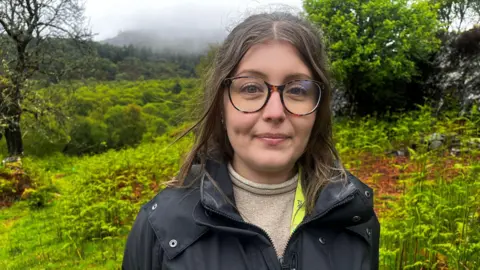
Heather Morrison says artificial technology tools have simplified the process of identifying species
Volunteers have been using a mobile app to photograph, log and record species while searching through the forest or taking a leisurely walk.
It also records their GPS location. Artificial intelligence tools then suggest what the identified item might be, which can then be verified by experts.
The technology allows for much swifter identification than previous surveys, which date back to the 1970s and are incomplete.
More than 3,400 records have so far been added by 171 people.
Volunteer co-ordinator Heather Morrison said the volume of data gathered should help identify areas suitable for protection.
She added: "It helps us find fragments of rainforest that we maybe didn't know existed."
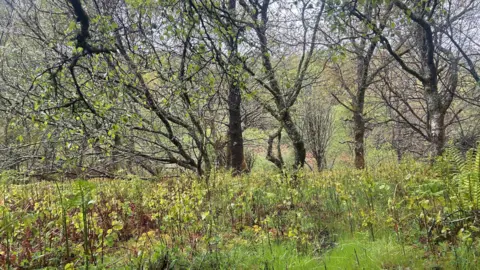
Aspen trees struggle to grow to maturity because of deer eating the saplings
The remnant of rainforests that remain in Scotland face two main threats, from deer and rhododendron.
Over-population of deer means they graze on young plants and tree saplings before they ever have a chance to reach maturity.
The rainforest in West Cowal contains carpets of young slow-growing aspen, a relatively rare tree which can be a rich haven for biodiversity when they reach maturity.
But experts say they are struggling to grow because they are being regularly eaten by herds of deer.
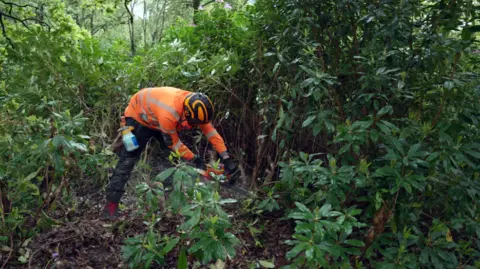
Rhododendron ponticum is one of Scotland's most invasive plant species
Rhododendron is a non-native shrub which was introduced to gardens as an ornamental plant by the Victorians.
It has spread extensively across the north-west Highlands where it often overpowers native species.
Trees for Life has described its impact on nature and native woodlands as "catastrophic" and the Alliance for Scotland's Rainforest has said 40% of the area is affected by the plant.
Teams are deployed all year round to cut and kill rhododendron in the rainforests to allow native woodlands, and the life they support, to return.
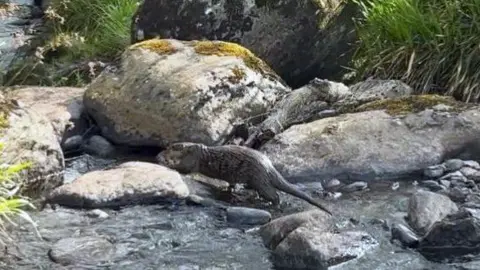
The rainforest can provide a habit for the elusive Eurasian otter, captured here by our cameraman
Scotland is one of the most nature depleted countries in the world, ranking 28th from the bottom of a list of 240 countries and territories.
The State of Nature report, published in 2023, showed there had been a 15% decline in average species abundance since 1994.
Lichens, bryophytes (mosses) and flowering plants, for which the rainforest provides the ideal environment, have suffered "massive declines in distributions since the 1970s," the report added.
In January, the Scottish Parliament passed the Natural Environment Bill which aims to halt and reverse the losses being experienced in our biodiversity.
Legally-binding targets will be set in secondary legislation for the restoration of habitats such as temperate rainforests.
Additional reporting by Julie Anne Barnes.







 English (US) ·