
 7 hours ago
9
7 hours ago
9
ARTICLE AD BOX
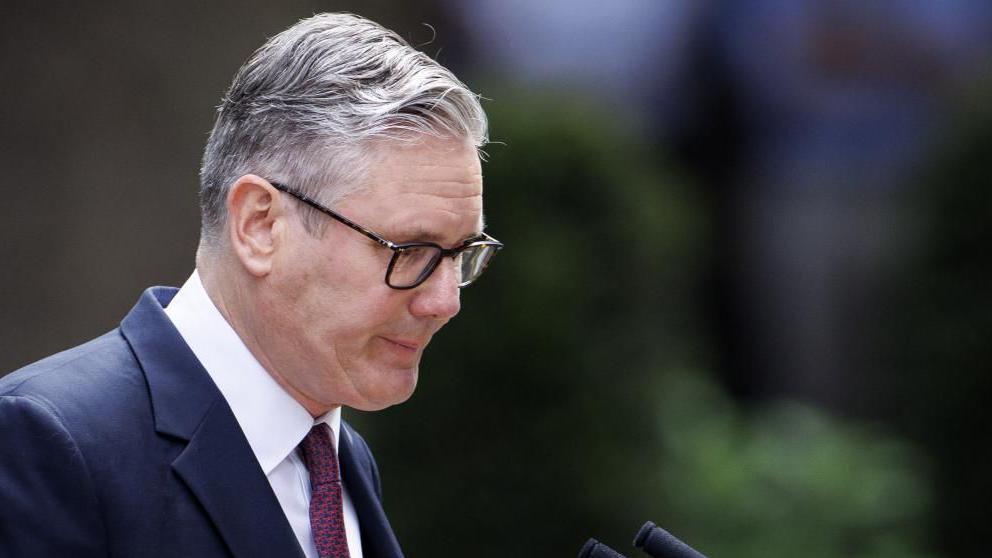 Image source, EPA
Sir Keir Starmer announcing his resignation
For month after month, week after week, sometimes day after day, we have chronicled the unravelling of Sir Keir Starmer's government.
Nonetheless, it still prompted a sharp intake of breath on Monday morning to be standing in Downing Street yet again, awaiting another prime minister publicly reading the last rites on their time in the highest office.
This wasn't a leader brought down by scandal, as Boris Johnson was, nor economic calamity, as Liz Truss was.
But there were parallels with the downfall of both Johnson and Truss: Sir Keir, like both of them, had lost the capacity to viably govern. When that happens to a prime minister, they are done for.
All three lost the capacity to govern because their own MPs lost faith in them.
And all three stood at the lectern in Downing Street within four years of each other. Extraordinary.
Theories abound about why our last five prime ministers have not lasted very long. To what extent is a stagnant economic picture, dating back to the financial crisis of nearly 20 years ago to blame? What about the incessant noise of social media?
The contributors to the outlook of so many Labour MPs about Sir Keir were multiple, building slowly and then exploding quickly.
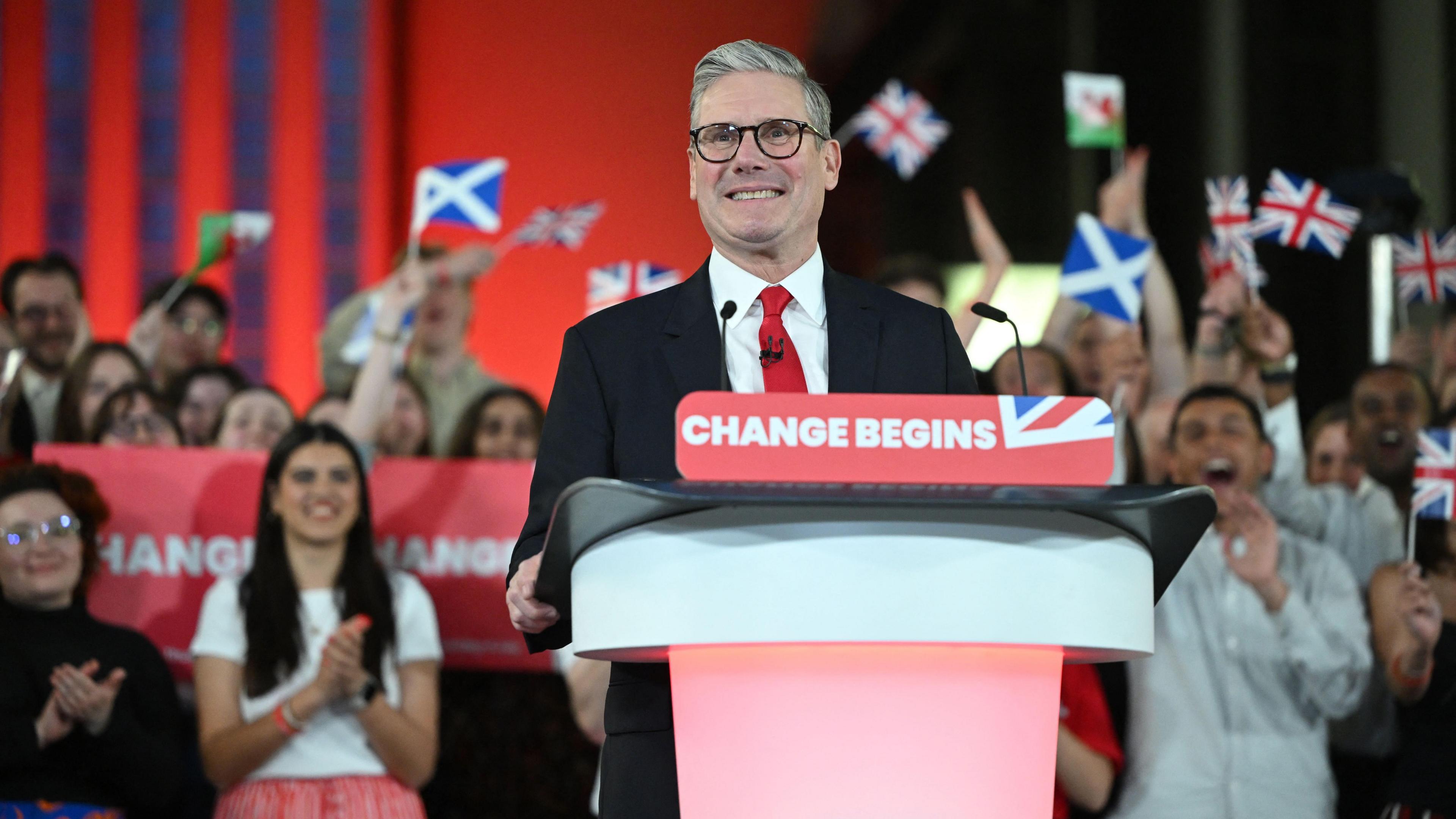 Image source, AFP via Getty Images
Labour won a majority of more than 170 seats in July 2024 with Sir Keir as leader.
The cancellation of the winter fuel payment for many pensioners, announced shortly after Labour's general election win two years ago and eventually reversed, was one of many U-turns.
Then there was the row over freebies, dubbed by some "passes for glasses".
And within weeks of Labour taking office, dysfunction at the heart of Downing Street became public when we revealed a briefing war seeking to ensure the removal of Sir Keir's first chief of staff, Sue Gray.
All of this happened in the first three months.
Then, just over a year ago, a crucial moment: the prime minister's humiliating climbdown on his planned changes to the benefits system.
It was the moment Labour MPs collectively realised they could push this government around and so amounted to a massive loss in authority for Downing Street.
And all of this before the rolling saga and acute embarrassment of the appointment of Lord Peter Mandelson as ambassador in Washington.
Lord Mandelson was sacked in September but the row dogged the prime minister for month after month of what would turn out to be his remaining time in office.
In the midst of it all, Morgan McSweeney , the man who had been at Sir Keir's side for his entire time in political leadership, both in opposition and government, resigned, as did yet another No 10 director of communications, Tim Allan.
Bubbling beneath all of this, firstly expressed privately and eventually publicly, was the growing discontent among Labour MPs about their leader. The private jitters of plenty have been there for ages.
Are UK prime ministers spending less time in the job?
It is our job as journalists to chronicle this to the best of our ability, and so give you a real sense of what is really going on, often a long way from TV cameras and microphones.
By necessity, much of this is off the record – information and sentiments shared with us, on the condition we don't reveal publicly who it is we have spoken to in a way that could identify them.
Sometimes I get emails from readers, viewers and listeners expressing frustration that they are hearing about "sources" or "senior figures" and demand we name people.
But if we only brought you the quotes from people willing to put their names to them, we would present a very shallow interpretation of events.
Like in any organisation, or indeed family, sometimes the most candid views are expressed privately, at least up to the point that the weight of an opinion becomes sufficiently significant that people choose to share their view more widely.
Take a moment in November, when we reported via well-placed sources that Sir Keir would fight any attempt to depose him.
This story came to light because the prime minister's allies were fearful he faced imminent danger. They were sufficiently fearful that they were willing to advertise their own vulnerability in the hope of diminishing the likelihood of him facing a challenge.
By New Year's Eve, these private conversations meant I could report 2026 would be Sir Keir's make or break year, and the likely fulcrum of the political year would be the elections in May.
But things accelerated more quickly than some might have anticipated, when in February we reported on the prime minister's political near-death experience, when the Scottish Labour leader, Anas Sarwar, publicly called for him to go.
It was clear then, as we reported at the time, that this was unlikely to be the end of the matter – and so it proved. The elections in May solidified in the minds of countless MPs what many of them had long feared - their leader was deeply, deeply unpopular and costing their party support. The view of Labour MPs, channelling what they saw as the view of the electorate, calcified to a point where Sir Keir's imminent departure became near inevitable. Against that backdrop, he was powerless to prevent Andy Burnham contesting the by-election triggered in Makerfield in Greater Manchester to give him a chance to return to Westminster and take over as Labour leader.
Now, at the end of a week in which the prime minister has set out a timetable for his departure and a newly re-elected Andy Burnham assembles a programme for government, we witness what remains of Sir Keir's government disintegrating before our eyes.
The story of the public spat between the home secretary and the prime minister over the future of immigration minister Mike Tapp is a case study in discipline and coherence in government breaking down.
Home Secretary Shabana Mahmood is furious that one of her junior ministers has, as she sees it, been insubordinate.
Tapp is setting out his policy stall as Burnham, expected to be the next prime minister, thinks about who will get jobs in his new government.
Tapp, incidentally, was super loyal to Sir Keir until the last.
And the prime minister, who was told by Mahmood last month that he should stand down, has now rejected her public demands to sack Tapp.
This is, to put it gently, some distance from a group of government minsters acting collectively and coherently. The last crumbs of power are being brushed away in Sir Keir's final weeks in Downing Street.
Meanwhile, in a cluster of offices in Westminster, and in Manchester, a government-in-waiting takes shape.
Andy Burnham will give a set-piece speech at the beginning of next week sketching out some of his planned key themes and by the middle of next month he is highly likely to be prime minister.

 English (US) ·