
 2 months ago
58
2 months ago
58
ARTICLE AD BOX
30 minutes ago
Guy DelauneyBBC Balkans correspondent, in Ljubljana

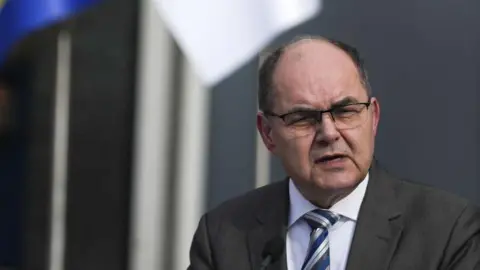 Anadolu via Getty Images
Christian Schmidt has served as High Representative for Bosnia and Herzegovina since 2021
The most powerful figure in Bosnia and Herzegovina has confirmed that he is stepping down.
Christian Schmidt has served as international high representative since 2021, the second-longest tenure of any high representative. His time in the post was filled with conflict and controversy.
His office said that Schmidt "has taken the personal decision to conclude his service to the implementation of peace in Bosnia and Herzegovina".
His appointment was never approved by Russia and now it seems he has also lost the support of the US, making his position untenable. A broader conundrum is whether the Office of the High Representative itself has a future and, if not, where that would leave Bosnia.
The role dates back to the 1995 Dayton Peace Agreement which ended the country's ruinous ethnic conflict.
The UN-appointed high representative is supposed to ensure that the agreement is followed and has wide-ranging powers to keep the country's ever-fractious ethno-political leaders in line.
During his stint as high representative, Paddy Ashdown memorably wielded these so-called "Bonn Powers" sacking 60 Bosnian-Serb officials in one day in 2004 for refusing to cooperate with the Hague Tribunal.
Ashdown duly received the not entirely flattering nickname of "Viceroy of Bosnia".
Subsequent holders of the office were far more low key. Bosnia and Herzegovina's international supporters focused on the country's leaders dealing with their affairs on their own.
The failure of that approach was reflected by Schmidt's more activist role following his appointment.
 Anadolu via Getty Images
Protests in Sarajevo in 2023 against Christian Schmidt about a electoral law reform
He repeatedly used the Bonn Powers to block separatist legislation promoted by the Bosnian-Serb leader, Milorad Dodik, who ignored these blocks. This struggle led to Dodik receiving a one-year prison sentence and six-year ban on holding public office.
But it appears that Dodik will be the long-term winner. His expensive deployment of Washington lobbyists paid off when the US lifted its long-term sanctions on him.
Cynics have noted Dodik's subsequent support for the award of a major gas pipeline project to a hitherto obscure US company with links to the Trump family. In contrast, Schmidt's reservations about the project appear to have cost him Washington's support.
The next move could be vital to Bosnia's future.
Schmidt says he will remain in office until a successor is selected. But Russia has repeatedly backed up Dodik's calls for closure of the Office of the High Representative.
If the US takes a similar stance, Bosnia could lose the only figure who can act as a safeguard against the separatist ambitions of ethno-nationalist leaders.

 English (US) ·