
 2 years ago
139
2 years ago
139
ARTICLE AD BOX
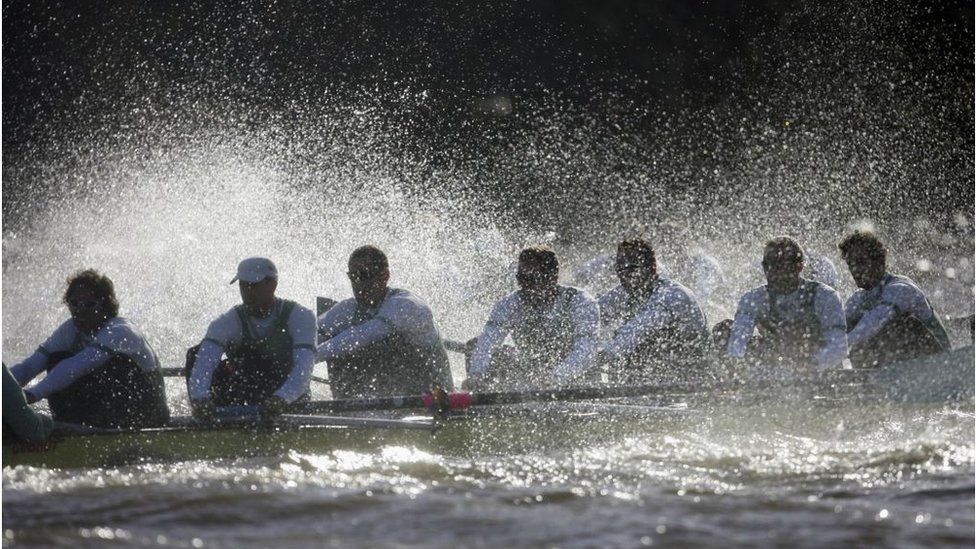 Image source, Getty Images
Rowers have been told to make sure they do not swallow any splashed water
Rowers taking part in the 2024 Boat Race between Oxford and Cambridge in London are among rowing clubs that have been told not to enter the Thames after high levels of E. coli were found.
Crews have also been warned to cover blisters, and wear footwear when getting in and out of the boat.
Pressure group River Action said tests indicated the bacteria came from sewage directly discharged into the river.
Thames Water said improving river health was a "key focus" for the firm.
Rowers from both Oxford and Cambridge universities will take to the iconic 4.25-mile Championship Course on the Thames on Saturday afternoon, the 169th men's and 78th women's races.
Image source, River Action
Image caption,A water sample taken from the River Thames around Hammersmith Bridge in west London
River Action chief executive James Wallace said: "It is a tragic situation when elite athletes are issued with health guidance ahead of a historic race on the capital's river.
"Our water quality results show what happens after decades of neglect by an unregulated water company, Thames Water."
River Action, British Rowing and The Rivers Trust say they are asking the government to enforce the law and prosecute polluters.
They have issued new guidance to rowing clubs on safety in polluted waters, which has been included in the Boat Race briefing packs to both universities.
Sample information
The bacteria was discovered between 28 February and 26 March, using a World Health Organisation-verified E. coli analyser.
The 16 tests around Hammersmith Bridge, in west London, indicated an average of 2,869 E. coli colony-forming units (CFU) per 100ml of water.
To meet the Environment Agency's inland bathing water quality standards, the level should be below 1,000 CFU per 100ml.
River Action said the highest level it recorded was 9,801 CFU per 100ml, meaning it was nearly 10 times higher than levels found in bathing waters graded as "poor" by Environment Agency standards.
This is based on publicly available data that showed the water company had discharged sewage into the Greater London area of the River Thames for 1,914 hours from the start of 2024 up to 26 March.
Image source, Getty Images
Image caption,Crews are among rowing clubs that have been told not to enter the water this year
The E. coli bacterium, which is found in faeces, can cause a range of conditions, including urinary tract infections, cystitis, intestinal infections and vomiting, with the worst cases leading to life-threatening blood poisoning.
Boat Race 2023: What happens when the Boat Race goes wrong?
In a statement, Thames Water said: "We have experienced higher than average long-term rainfall across London and the Thames Valley with groundwater levels exceptionally high for the time of the year.
"The overflows are designed to operate automatically when the sewer network is about to be overwhelmed, which then releases diluted wastewater into rivers, rather than letting it back up into people's homes.
"We are working hard to make these discharges unnecessary and have published plans to upgrade over 250 of our sites".
Listen to the best of BBC Radio London on Sounds and follow BBC London on Facebook, X and Instagram. Send your story ideas to hello.bbclondon@bbc.co.uk
Related Internet Links
The BBC is not responsible for the content of external sites.








 English (US) ·